See Part One
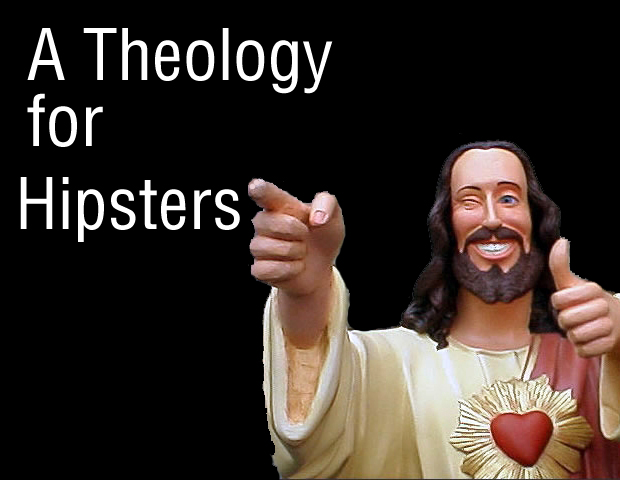 If it is not being formally stated in academia there is nonetheless a buzz around and among 20 something Christians which suggests that the future of the church depends upon their theological, ecclesiological, and cultural reformulations. Key individuals have addressed this in their own writing, and while none is specifically addressing “hipsters” the authors themselves appeal to hipsters at large and therefore we must perceive some relationship. Take for example Rob Bell. Bell argues that theology is like a trampoline and is therefore flexible, it possess a give and take nature. This, he says, in order to advocate a “repainting” of the Christian faith.[1] But its more than just about theology for Bell, it’s about abandoning the Christian subculture too. For him, like others, it’s about changing the culture of the church to be more “relevant,” a massively popular term among Emergent writers.[2] It is this culture that so desperately needs changed. Guys like Jon Acuff and Matthew Paul Turner have created a niche market for themselves by writing with sometimes biting satire over the ridiculousness of Christian subculture. But in the minds of not a few people the great hope for the future of evangelicalism is our 20 something hipster saviors. It is they who will move the church from its uptight, backward ways to relevance.
Of course at one level there is some truth to these statements. The future of the church does depend, in some measure, on what the upcoming pastors, lay leaders, and average church members do. The Southern Baptist Convention is, itself, experiencing the difficulty of isolating itself from the influence of their young men and women. The SBC’s Great Commission Resurgence and reformulation is, in some part small or great, a response to the complaints of its 20 something members, most of whom are exiting in significant numbers. But to suggest that the only hope for the church is for its young adults to give it new PR is nonsensical. Christ promised he would build his church and the gates of hell would never destroy it (Matt. 16:18). Besides Jesus is savior and he defined who he is for us, what the church is, and what it is supposed to do and relevance in terms of cool was never part of that equation. So while I am not a hipster critic I am neither convinced of hipsterisms’ salvific qualities. These two extremes will be picked apart as we work our way throughout the work, but it needed to be clearly stated up front.
The following analysis of Christian hipsters will take what I believe is a logical development. We begin by examining what specifically a hipster is, looking at the history of cool and hip and its relationship to Christianity in particular. The turn from Fundamentalism without abandoning the Fundamentals will bring us into the second and third divisions. This lends itself naturally, then, to a segue into a discussion about culture with a theology of culture articulated and then an examination of hipster specifics (including mission, social justice, and art). Then it all concludes with an examination of and recommendation for the church’s relationship with hipsters. The goal is more than to deliver information. I am, myself, a pastor and therefore my goal is to help the church. I believe hipsters offer some great benefits to the church and vice versa, and so as always, my goal is Biblical discipleship. May Jesus be praised among hipsters and non-hipsters alike!
[1] Rob Bell, Velvet Elvis: Repainting the Christian Faith. Grand Rapids: Zondervan, 2005. 28 ff.
[2] I recognize of course that Emergent and “hipster” are not the same. There is a great deal of interplay, however, between the two and so it is right and necessary at some level to interact with one as it relates to the latter.


2 Comments