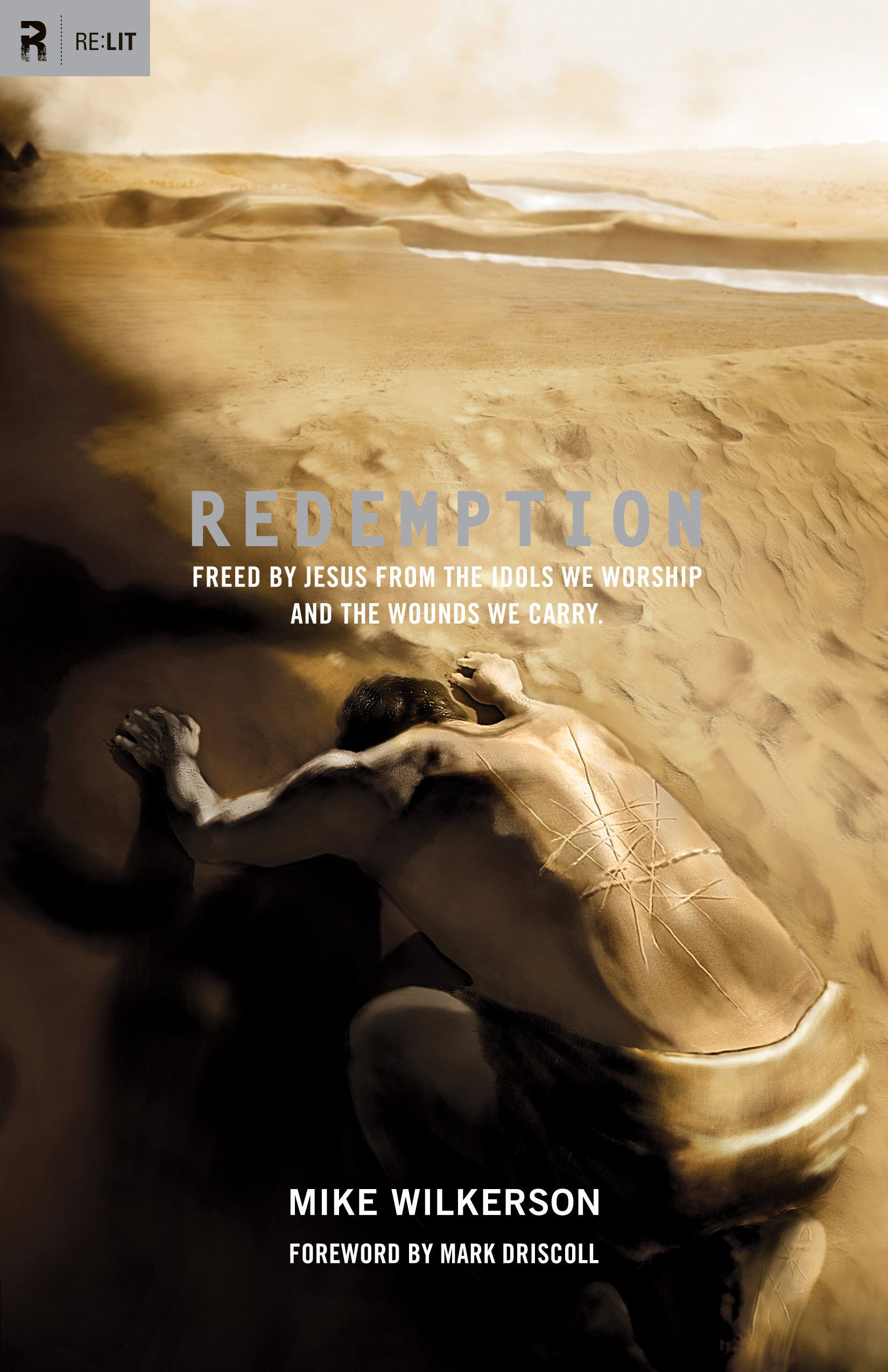
 Serving as a pastor of a church composed largely of recovering addicts and alcoholics introduced me to a world of suffering that I had only known about in theory. When my counseling cases started involving rape victims, meth addicts, and suicide attempts I knew I needed help serving my people. Of course the reality is that those issues aren’t isolated to a few churches; that is a reality in many fellowships. It’s probably the case in your church too; you just don’t know it yet. We all need help in dealing with the realities of addictions and the deep wounds behind them. Redemption by Mike Wilkerson is just the resource you need to help you. In fact, whether you’re counseling addicts or struggling with addiction yourself this book is one of the most practical applications of the gospel to recovery ministry that I have ever read.
Wilkerson knows something about this kind of ministry. Though the list of endorsements on the back of the book is impressive, it is the gritty stories inside the book that make it worth your time. Wilkerson is the Redemption Groups and Counseling pastor at Mars Hill Church in Seattle, WA. The stories inside this book are the true stories from his congregation. They are examples of just how life changing and practical the gospel is. The book itself is based on the curriculum that Mars Hill uses in the Redemption Groups, a modified version of a recovery group. Thus readers get to benefit from the years of experience in recovery counseling that Wilkerson and his team have been doing.
One of the interesting features of the book is its use of the story of the Exodus. Pastor Wilkerson understands something that many Christians need to recovery: our lives are like a living story. “We are meaning-makers” he says. Quoting Paul Tripp he writes:
“We do not live our lives based on the bare facts of our existence; we live our lives according to our interpretation of those facts.” In other words, it’s not our raw experiences that determine our lives but the meaning we make of them – the stories we tell and the stories we believe. Out of those stories, we live our lives. (21)
Utilizing this motif, then, Wilkerson helps us to see how the Israelite story of the Exodus, and more pointedly the story of Christ’s redemption that it points to, can reshape the story of our lives. He gives us examples too, stories of abuse, rape, and addiction. By looking at these stories through the lens of the Exodus we see not only similarities, but we see God’s story of redemption which offers hope and salvation to all people. “We must let his story rewrite ours,” he writes, “and sweep us up into something much greater than ourselves” (27).
Each of the eight chapters covers an aspect of the story of the Exodus event. By using a part of Israel’s story Wilkerson highlights an important theme in recovery counseling. So by pointing us to the Israelite’s cry for help, and God’s response we are reminded that “When you suffer, God is near.” By looking at Pharaoh’s response to the initial demand from Moses we are reminded that “it may get harder before it gets better.” There are many practical themes highlighted this way, but at the heart of each chapter is an awareness that these struggles are more than just bad habits, more than just issues slavery, more than just deep wounds. These issues are essentially issues of idolatry. That is a key to understanding this book, and a key to understanding healthy recovery counseling.
We are all creatures of worship. We can’t change that part of our nature. “To not worship is to not live,” writes Wilkerson (29). The question, then, is what do we worship. The book of Exodus involves the concept of worship often. Pharaoh’s worship of himself and his claims to deity come up often. God’s battle against the gods of Egypt dominates whole chapters. Israel’s struggle to abandon the false gods of Egypt after their redemption is a major revelation. Ultimately God’s decision to rescue his people is all about their worship of the one true and living God. Wilkerson does some great exegetical and historical work for us in unpacking these elements. But he takes these same concepts, then, and applies them to the hearts of his congregation. He helps us to see how addiction, slavery, and sorrow can be worship issues too. In a particularly insightful passage the author writes:
Though [the Israelites] were free to worship God, when it came right down to it, they still lived for Egypt. And this brings us all the way back to the core of our problems and therefore to the brink of the solution. We love the wrong things, so our worship is distorted. We have exchanged the worship of God for golden calves. The solution: renewed worship…
You can’t just “stop it,” because the it is always more than behavior. It is always rooted in your affections, in what you love – what you worship. Chalmers points the way forward: we worshiped our way into this mess, and by God’s grace, we’ll worship our way out. (37)
Much of the book then is about helping us reorient our worship towards Jesus. This is a healthy and effective direction for recovery counseling. It may seem simple on the face, but don’t confuse that with naiveté.
Wilkerson is not naïve about the depth of some wounds or the bondage of some addictions. He is aware that the gospel, though liberating, still needs to be continually applied for lasting transformation. The book deals with a host of related aspects helping readers to reshape the way they think. He addresses emotions of guilt and shame. He helps readers to understand how they have been both sinned against and yet have sinned. Addressing both realities is necessary for bringing about change. He applies the gospel to our everyday desires. He helps us to shift our focus from our circumstances to the promises of God. There is much in this book that deserves its own individual review. It is packed with insight.
Whether you are a counselor or a counselee this book can be a tremendous resource. In fact, whether you’re a counselor or a counselee this book applies to your life, your struggles, and your need. In reading this book I found that though I read it for help in counseling others, it often helped counsel me. That’s the power of the gospel, and Wilkerson uses that power to his full advantage in writing. A gospel-centered recovery book is hard to find! In Redemption Mike Wilkerson has offered us one. It’s the best book on the subject I have ever read and it will serve you well.
 Sparrow & Heart Soul Care
Dear Dave,Thank you for the Blessed Teachings and it is strengthening me much to study and to share with other people in India, you are doing great for Lord. Evangelist Babu