
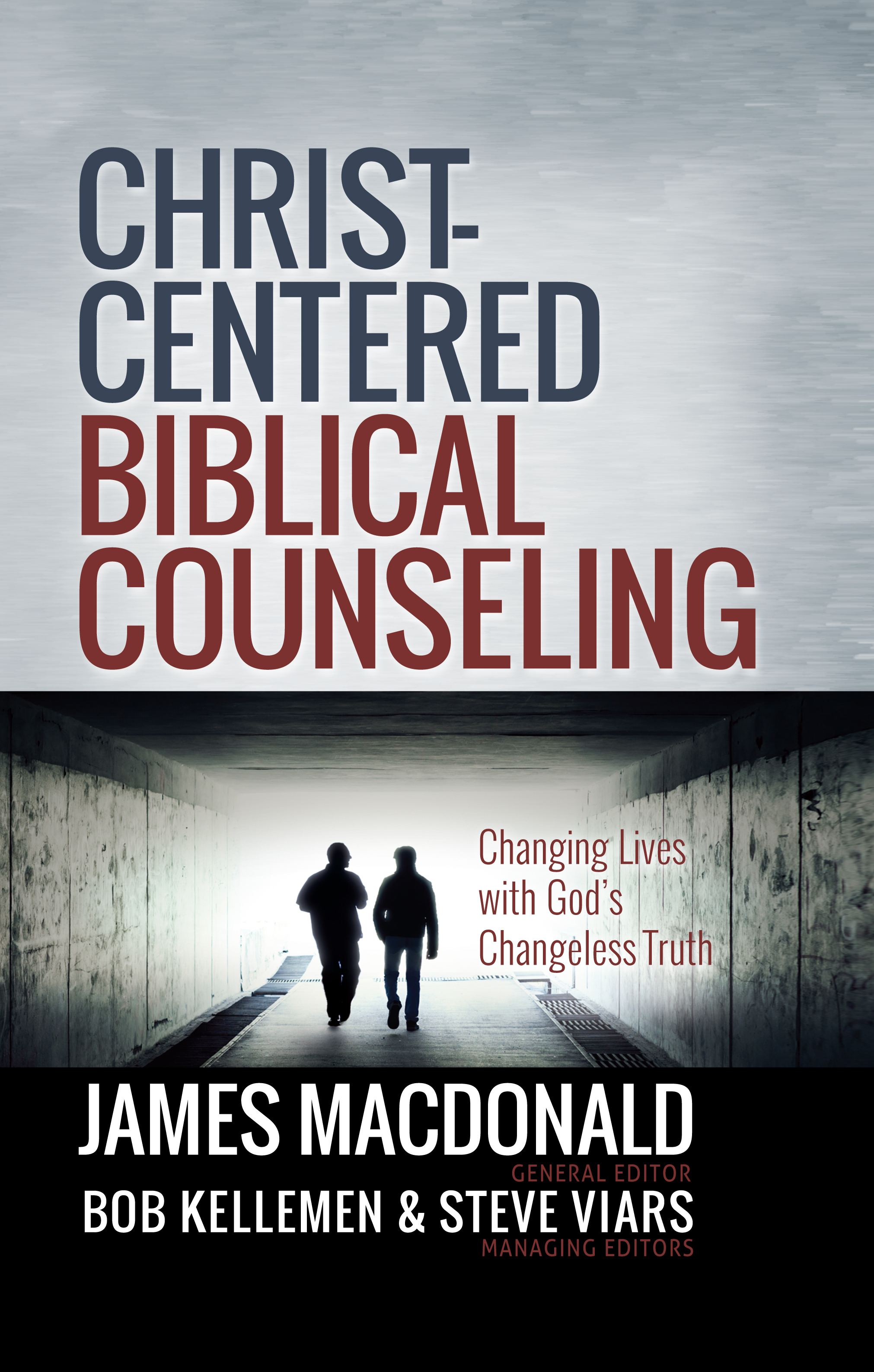
 I don’t have time for personal politics. The truth is they shouldn’t even exist within Christian organizations, but they sadly do. In my own world there are too many people to care for, too many who need to hear the gospel, too many who need counsel for me to consume myself with such asinine nonsense. That’s why I was never able, at the end of the day, to identify myself with either NANC or CCEF, or any other Biblical counseling group. To categorize myself meant I had to embrace denials of another ministry, something I was simply unwilling and uninterested in doing. That reality is also why I am so thrilled that The Biblical Counseling Coalition exists. The BCC has brought together the best of both camps without the politics of either. The Coalition’s new book Christ-Centered Biblical Counseling is evidence of their role as a bridge between various communities. The book is also the perfect tool for pastors who are simply interested in using the Scripture to help impact the lives of believers. Christ-Centered Biblical Counseling is a wonderful introduction to the theology and methodology of Biblical Counseling precisely because of its diversity within unity.
The book gives readers a wonderful breadth of material combined with great uniformity. It is broken down into two parts. Part one covers the practical theology of Biblical counseling and part two the practical methodology. It combines the best of theory and practice, foundation and implementation, orthodoxy and orthopraxy. The variety of authors contributing to the volume each adds their own special emphasis to the volume. Even as some there is some overlap between the chapters the different authors give us a new way to look at related content. This diversity, however, is balanced perfectly with the common foundation of Christ and the Scriptures. In fact the book itself represents what the Coalition is all about. It’s summed up wonderfully by Kellemen and Viars in the Introduction.
The forty varied authors of this book have joined together because they have one foundational belief in common. The editors state it this way:
We want to promote authentic spiritual growth among God’s people in ways that are grace-based and gospel-centered, relationally and theologically robust, grounded in the local church, and relevant to everyday life and ministry. Although we work in a variety of ministry settings we are all deeply interested in the process of progressive sanctification – daily growth in Christ. We are less interested in the number of disciples and more interested in the quality of discipleship. (12)
It is the product of both an irenic spirit and theological concreteness. You might define the book as one that is grounded in both relational and theological robustness, that’s how the editors think of their work. It emphasizes both concrete theology and practical application.
Though the book makes a strong distinction between theology and practice the two are actually interrelated throughout each chapter. The first fourteen chapters discuss theological foundations, covering topics like: the glory of God, the sufficiency of Scripture, the problem of sin, the centrality of the gospel, and spiritual warfare – among others. In each chapter, however, there is a combination of robust theological content with robust relational application. No chapter deals exclusively in theory or in abstract, but each makes clear that theology is done in relation to life. As Kellemen and Viars write:
What makes biblical counseling truly biblical? Christ-Centered Biblical Counseling seeks to offer a positive and comprehensive answer to that question by communicating a robust, relational approach to biblical counseling. (15)
We are truly “biblical” only when we seek to apply the Word of God to our world, after all that’s God’s intent in giving us Scripture.
Chapters 15 through 28 cover the practical methodology of Biblical counseling, addressing topics like: ministry in the local church, small group ministry the goal of counseling, relationships in counseling, diagnoses and treatment of idolatry, and the power of confession, repentance, and forgiveness – among other things. But even in the practical treatment the authors have not divorced it from theological content. Robust theology and robust application go together. It’s the perfect balance in that regard, and that makes this an ideal book. For all its diversity for all its variety in authorship and content it is essentially grounded in unity.
I thoroughly enjoyed this book. It has not only served as a great refresher for me as a Biblical counselor, but we are using it to introduce our congregation to the theology and methodology of counseling. In training our folks to do the basics of discipleship we are working our way through this book and discussing its content. It has already proved helpful. What I love best about this book is what I love best about the Biblical Counseling Coalition: it draws together the best resources out there on the various topics of Biblical counseling and doesn’t concern itself with which camp it comes from. The book, like the organization that produced it, delights in the diversity grounded in gospel and Scriptural unity. That makes Christ-Centered Biblical Counseling a perfect book for the church.
 Sparrow & Heart Soul Care