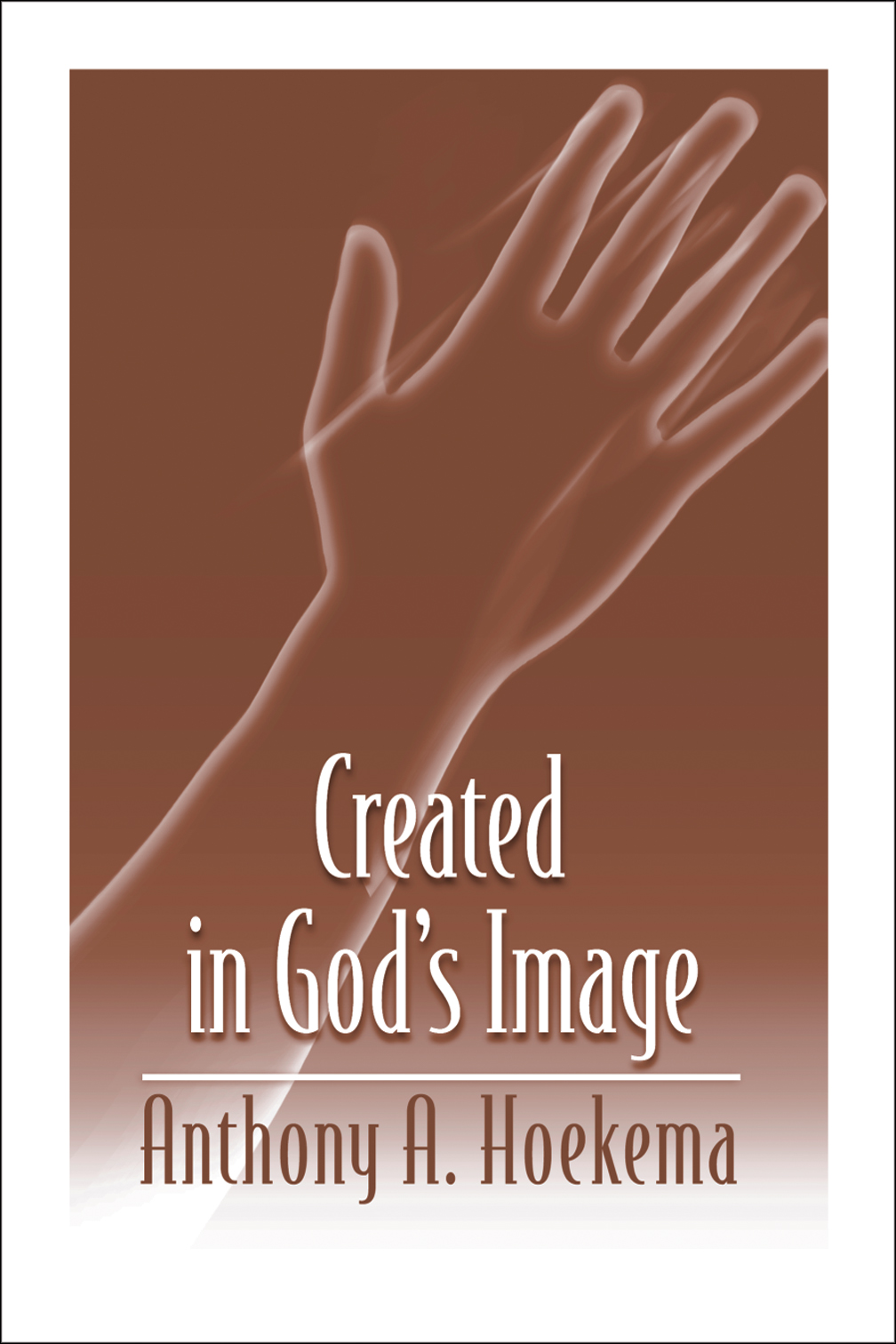
 Issues of identity plague us all at some point. The question of “who am I” is a common one. Figuring ourselves out is never an easy task, and it is even harder when the messages being sent our way are so contradictory and damaging. Anthony Hoekema, former professor of systematic theology at Calvin Theological Seminary (1958-1979), offers us the Biblical perspective on this subject. Hoekema passed away in 1988 but his three-volume set on essential doctrines of the Christian faith are classic. This particular volume, Created in God’s Image is thorough and helpful look at humanity from the Biblical perspective. It is both honest about our being made in the image of God and our being contaminated with sin. It is precisely this balanced image that we need to recover today.
Hoekema sets forth in this book “what the Bible teaches about the nature and destiny of human beings” (ix). This is a foundational doctrine for Christian theology and one that we must get right. “We must remember,” he writes, “that often non-Christian notions have crept into so-called Christian anthropologies” (4). Hoekema is concerned throughout the book with correcting false notions of humanity, the self, and sin. The book deals with a wide array of issues that touch on the subject. His best contribution, however, is the balanced perspective he offers.
Hoekema is committed to what the Bible teaches and so he presents the whole picture of what the Bible teaches on anthropology. He points to man’s being made a person, being made in the image of God, and retaining that image even after the fall. But he does not so over romanticize humanity post-fall that he ignores the damage that sin has done to us. Contrary to some, Hoekema contends that the imago Dei in man is not annihilated but it is marred. He writes:
In fact, the very greatness of man’s sin consists in the fact that he is still an image-bearer of God. What makes sin so heinous is that man is prostituting such splendid gifts. (85)
The honest and balanced look is what makes this book so worthwhile. For there has been such a backlash against the “self-esteem” movement within certain circles of Christianity that it has, I believe, negatively affected the Christian doctrine of anthropology. There has also equally been an obsession with the self in some circles that it has elevated man beyond any corruption from sin. Hoekema offers us a balanced and Biblically supported alternative to these two extremes.
His chapter on “Self-Image” is especially helpful in this regard. He deals with this subject in a way that does not view self-image as an end in itself; “it is rather the presupposition for, a help in, and a result of, one’s proper functioning in” relation to others, creation, and God (102). He also talks honestly about the way that sin has corrupted our view of ourselves, and the way that the gospel is sanctifying us and ought, therefore, to reshape how we view ourselves. The term “self-image” “also lends itself well to a Christian understanding: seeing ourselves not just as we are by nature, but as we are by grace” (103). This balance is crucial for a world that is consumed with self, consumed with the answer to the question “Who am I.” We either think to highly of ourselves or too little and a Biblical anthropology solves both problems.
Hoekema’s book is incredibly accessible. Some will get bogged down in the historical survey in chapter 4,and some of the discussions of the “origin of sin” get heady, but by-in-large this book is worthy of your time. There are many reasons that I can recommend it, but chief among them all is that it gives us a balanced Biblical perspective on how to think about ourselves, and that is something we desperately need in this culture. If you’re wondering who you are, God has the answer…Anthony Hoekema helps to point us to it.
 Sparrow & Heart Soul Care
2 Comments