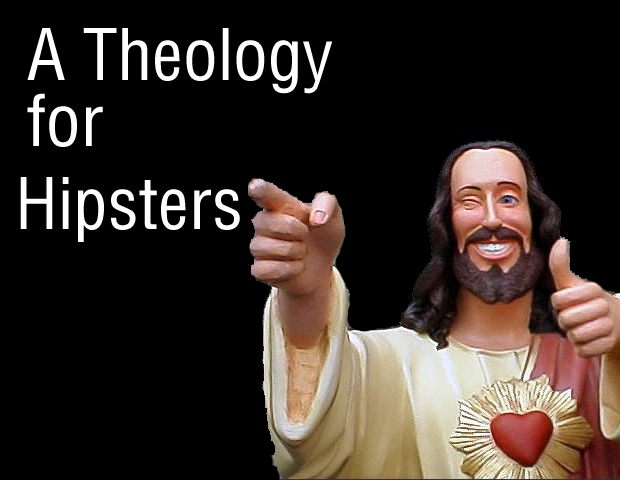
 One of the major issues that some theologians have been critiquing Hipsters on is their individualism. We talked last week about the rightfulness of that critique and some of the important nuance that needs to be expressed. A case study will help us see this more clearly.
In an interview with Phil Johnson, Pastor John MacArthur made the following statements regarding Darin Patrick’s book Church Planter:
You know, there’s a new book on church planting written by a guy named Darrin Patrick and it says if you want to be an effective church planter, develop your own theology.
You know when I read that I just almost fell off the chair. What? I mean, can you think of anything worse than to have some guy develop his own theology? This is ultimate niche marketing. Develop your own style, your own wardrobe, and then your own theology.[1]
The problem with this indictment of Patrick is that it is a complete misunderstanding. In fact many of MacArthur’s esteemed and respected colleagues did not see what he saw. The book was endorsed by Al Mohler, Matt Chandler, Tim Keller, Ed Stetzer, Daniel Aikin, David Platt, Bryan Chapell, Dave Harvey, James MacDonald, and Mark Dever. This is hardly a group of theological progressives and intellectual slouches. MacArthur offered a clarification of his remarks later on, after quite a buzz had been stirred over them, and here’s what he adds:
Meanwhile, let me clarify my remark: I was not questioning Darrin’s personal orthodoxy – his theology is clear in the book. The issue is rather the danger of developing a unique theology and a radically individualistic philosophy of church leadership. When one’s “own theological beliefs” are self-styled and unique, those beliefs need to be questioned. Protecting the soundness of our theological convictions is a commitment that we all must make. It is increasingly clear that the vanguard of evangelical Christianity is intent upon actively promoting change at every level within the church, and young men in particular should not be encouraged to think radical individualism is a positive mindset for church leadership and ministry style.[2]
MacArthur’s clarification adds little to the original comment. He says he’s not questioning Patrick’s theological orthodoxy, but then he leads us to believe that is exactly what he is doing. Patrick’s original words are worth noting. Here’s what Patrick wrote:
One of the common errors of young men who surrender to ministry is to simply adopt the model of a church that they have experienced or idolized. A similar mistake is to blindly accept the ministry philosophy and practice of a ministry hero. The man who is experiencing head confirmation is thoughtful about his own philosophy of ministry, his own ministry style, his own theological beliefs, his own unique gifts, abilities, and desires. In short, there is uniqueness to the way he wants to do ministry.[3]
Clearly from this quote we can glean that Patrick’s concern is for young pastors not to copy and imitate their pastoral heroes, but to do their homework and study for themselves. He states plainly not what MacArthur accuses him of (sheer novelty in theology) by rather that “the man who is experiencing confirmation is thoughtful about” what he does, believes, and uses. That, one would assume, is exactly what MacArthur wants. No one should blindly follow another preacher, whether that is Patrick or MacArthur or whoever. The issue that really clouds this debate is one that Brett McCracken seems to adopt himself, that any uniqueness or individualism is automatically sinful. I think, however, that a case can be made for some level of individualism and self-expression that is necessary and indeed even Biblical.[4]
[1] “Theology and Ministry: An Interview with John MacArthur.” January 16, 2011. http://www.gty.org/Resources/Sermons/GTY133_Theology-and-Ministry-An-Interview-with-John-MacArthur. February 11, 2011.
[2] “Radical Individualism: A Good Trait for Young Pastors.” January 21, 2011. http://www.gty.org/blog/B110121 February 11, 2011.
[3] Darrin Patrick, Church Planter: The Man, The Message, The Mission. Wheaton: Crossway, 2010. 37.
[4] In future posts we will unpack this idea more clearly and see it in relation to specific Scriptures.
 Sparrow & Heart Soul Care
Another good post. There’s definitely a fine line between maintaining theological integrity and still being able to have an individual approach to things. Like with everything else in life, it’s about finding that balance!