 Many people have been talking about Mark Driscoll’s tweet from a few days ago. It made Christian subculture headlines and created quite a stir, something not uncommon to Driscoll. The tweet asked the following question: So, what story do you have about the most effeminate anatomically male worship leader you’ve ever personally witnessed?

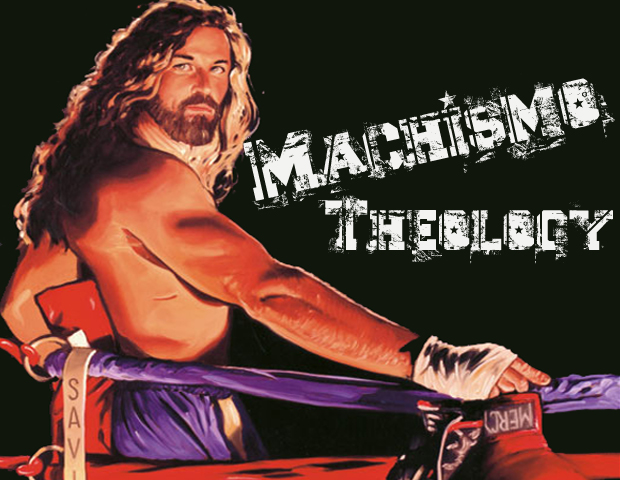
The question’s underlying implication (i.e. that the church has been so influenced by feminism that it lacks strong male leadership…as defiend by Driscoll) is a regular theme for him. But as I read the comment and the massive backlash that it created I wondered if Driscoll has accurately understood the problem and the resolution. In some ways I do believe we have an overly feminized church, but I don’t think that a hyper-machismo theology is the solution. After all the issue is what does it mean to be masculine and can you define that Biblically? I am not sure I have an answer to that question just yet, but I do think that Machismo Theology is dangerous for the church.
Driscoll defines masculinity in a peculiar way for a Christian and a pastor. He does not define it according to any Scriptural referent but rather according to stereo-typical culture referents. Masculinity, then, for him is something akin to driving a big truck, working with your hands, enjoying UFC, and being able to whip your own weight in a fight. Now I am a man, and I don’t wear skinny jeans, but I also don’t exactly fit into Driscoll’s model. Does this make me merely “anatomically male,” am I in sin because I don’t own a Ford F150? Am I less of a man because I’d rather play a video game (not that I do this that often) than train with an MMA fighter? You see my concern is that there is nothing about any of Mark’s standard that screams Biblical masculinity. In fact I struggle to find a clear picture of what it means to be masculine in Scripture beyond the concepts of being a leader and being courageous. Neither of which are particularly isolated to the picture Driscoll paints for us.
Don’t get me wrong, I am a huge Mark Driscoll fan. I have been for years. I believe God is using him in a powerful way to reach people in a difficult context. I believe he is a man of God who loves Jesus and loves the church. I believe he is a brilliant preacher and gifted communicator. But the way he deals with gender issues in my opinion is dangerous (and his quasi-apology doesn’t mitigate this danger). In fact I can think of several things that are wrong with this brand of Machismo theology.
1) It grounds criticism of others in arbitrary guidelines. Scripture warrants holding one another accountable, a type of judgment, if you will. But Biblical accountability is rooted in what Scripture itself says. The guidelines that Driscoll is using to critique others, particularly these worship pastors, is not evident from Scripture. Truthfully this is a new type of legalism…one I never thought the church would be dealing with. I appreciate Driscoll’s desire to reach dudes who are largely uninterested in the church. But by appealing to a base “manly-man” cultural idea, and requiring all male Christians to conform to it or be in sin isn’t he simply creating a new law for Christians? I think he might be.
2) This Definition of Masculinity Assumes A Biblical Support that cannot be substantiated. I’ve already alluded to this point. The truth is that masculinity is hard to define according to Scripture. I am not saying it can’t be defined but it is at least hard. Sexuality is easy, but this issue of what it means to be and act like a man is a bit harder to nail down. Again we can see principles of leadership and courage, but I am not sure what that has to do with pick-up trucks or skinny jeans. There must be more to our encouraging men to join and serve the church than calling them to imitate King David’s warrior lifestyle. After all God denies David the right to build the temple because he has “blood on his hands.” Solomon, the “King of Peace,” is called to build the temple.
There is more that can be said, and probably too much has been said about this subject. But we must all be careful that in avoiding one extreme we don’t swing the pendulum as far to the other. We must be balanced and above all we must clearly root our theology and sociology within the pages of Scripture. Until you’ve done that hold your tweets!
 Sparrow & Heart Soul Care
3 Comments