The Bible and Science
Few things have challenged the authority of Scripture as much as has science in the modern era. It has long been held that science is the source of objective truth in our world and that religion and religious thought are not acceptable sources of meaning for public discourse. This assertion by the masses has led many a Christian to pull their faith inward and leave the public realm to those objective scientists. This assertion, however, regardless of its popularity, is actually a complete fabrication.
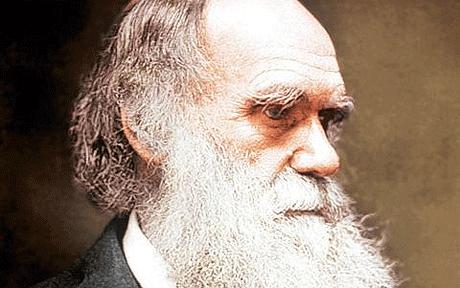
How did we get to this place where we believed in the superiority of Science to revelation? For many it starts with the Darwinian Theory of Evolution. For many the suggestion that life evolved over the course of millions of years, and was not the work of a divine Creator in seven days, raised serious doubts about the veracity of Scripture. But we have no reason to surrender Scriptural authority simply because science says so. For starters, the evidence for Darwinian Evolution is not as solid as some think. But, and perhaps more convincingly, many a sound theologian has contended that it is not impossible to believe in Scriptural authority and a form of evolutionary theory. John Walton recently wrote a work contending that Scripture’s question is not concerned with origins but with functionality and therefore raises no contradiction to modern science (see The Lost World of Genesis One, a review on this blog is forthcoming). Since Scripture is not a science book and does not attempt to answer all the matters of science, there may yet be room for both at the discussion table. This is not to suggest that Christians ought to adopt evolutionary theory, but simply to state that the two do not have to be in contradiction.
A second point to observe on our path, however, is that science’s use of the empirical method left many feeling that it was far more objective than theology. After all Science, it is said, can observe and document real objective facts in the world. No one can observe God. Many philosophies and scientific worldviews came along which contended that since theology cannot be observed it is therefore cognitively meaningless. But this is no more sure than was our previous point. Science is no more objective than is theology. Thomas Kuhn well argued this in his The Structure of Scientific Revolutions, where he stated that there are no such things as simple “brute facts” and that we interpret everything. John Frame has summarized the problems of our oversimplification of the scientific method well. He states:
Scientists do not just “check out the facts” by means of sense- experience. (i) Generally they use instruments…When he uses such instruments, the scientist is not only checking his theory with observations, he is also checking out his observations by means of theory-dependent instruments. (ii) Scientific work does not consist in just making and reporting observations but in analyzing and evaluating data. (iii) Scientific theories do not merely report observational data; they go beyond it. Scientific laws are usually general; they claim to hold for the entire universe. (iv) What we “see,” “hear,” “smell,” “taste,” and “feel” is influenced by our expectations. (V) Often, then, scientists do not recognize data that contradict their theories. But even when they do, they do not immediately accept such data as refutations of the theories in question. An apparently contradictory datum constitutes a “problem” to be solved in terms of the theory, not a refutation of it (Doctrine of the Knowledge of God, 116-17).
Furthermore, scientists themselves are no longer convinced of their ability to define truth. Carl F. Henry wrote, “The relation of the scientific enterprise to the realm of truth is also in debate. So elusive a goal is truth that even the champions of science now frequently define its aspirations less ambitiously in terms merely of utility: scientific hypotheses are useful methods of summarizing and organizing our past experiences of nature” (God, Revelation, and Authority vol. 1, 167).
The point to be made in all of this discussion is that the wise and discerning Christian need not surrender the authority of Scripture because modern science has been said to contradict it. For one, because science does not necessarily contradict Scripture; and second, because scientists themselves are not certain that they can give universal truth. Scripture is our source of authority and Christians need not be embarrassed or ashamed of this fact!
 Sparrow & Heart Soul Care