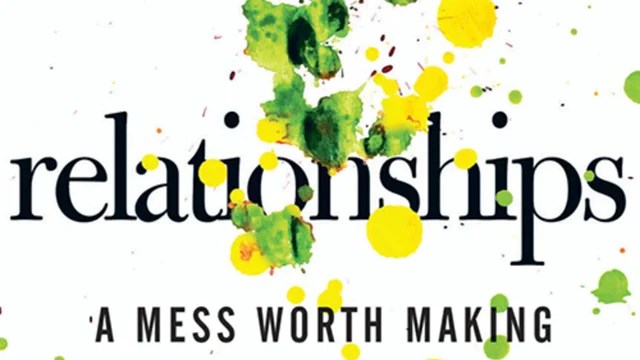

Relationships are messy. That’s the premise that governs Tripp and Lane’s book on the subject. None of us, of course, needs to be convinced of that reality. Anyone who has been in relationships at all understands their frustrating, complicated, and challenging dynamic. “This side of heaven,” the authors write, “relationships and ministry are always shaped in the forge of struggle” (2). And yet, as the subtitled of the book makes clear, relationships are a mess worth making. While there are many books on relationships, this volume approaches the subject from something of a unique standpoint. Lane and Tripp have offered a fantastic guide for navigating messy relationships, which starts with changing ourselves.
Relationships: A Mess Worth Making intends to give reader a Biblical lens through which to look at relationships. Plenty of books exist on the subject of relationships, but what these authors propose is that man-made wisdom often “promises that you can change your relationships without needing to change yourself” (7). God has a word about human relationships and He has a standard. When we use Holy Scripture as a guide we find that Scripture promotes change by starting with self. Of course, people sin against us, and wickedness does exist in the world. This is not a book that addresses the painful realities of abuse (though both authors have spoken to such issues in other places). This book deals with more common place troubles in human relationships and invites us to evaluate ourselves, our responses, our desires and agendas, and ultimately our God.
The book is composed of fifteen chapters, each touching on a different aspect of human relationships. Lane and Tripp cover topics like sin, agendas, communication, forgiveness, hope, burdens, and mercy. They give readers a Biblical framework for thinking about each of these elements (and others) in relation to other people. They remind us that we are sinners, interacting with sinners. They also remind us that God created us for relationships and that while none are perfect this side of heaven, they continue to be a means of grace and sanctification in our lives. Through exegesis of the Biblical text and illustrations from their own relationships, the authors offer clarifying guidance on common relationship struggles.
There was much in the book that I appreciated. There are times and moments where the counsel that they provide will seem basic to some readers, and yet the way they say it is fresh and refreshing. We all need to hear the basics again. For many readers, however, these concepts will seem new and profound. Our culture does not think about relationships within a Biblical framework. When it comes to relational problems we almost always start with the other person’s failures because they are so obvious to us. In the process, however, we fail to produce change because we miss a key component to many relational problems: our selves. Tripp and Lane invite us into deeper analysis and as a result deeper friendships.
I would highly recommend Relationships: A Mess Worth Making. It is a Biblical and practical guide for Christian readers. It will serve to either reinforce concepts or it will help you learn Biblical principles you need. Most significantly, it will help you learn the habit of self-evaluation when you encounter relational problems, and that is a principle Jesus wants us to learn and practice (Matthew 7:3-5).
 Sparrow & Heart Soul Care