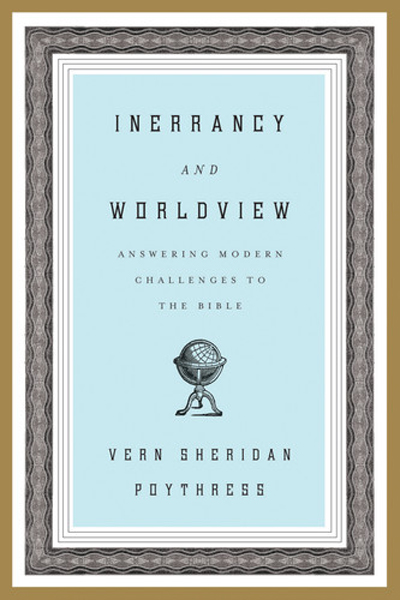
 Where did Moses come up with this stuff? Interestingly enough both conservative and liberal scholars will point out that Moses didn’t come up with it. Conservative scholars will remind us that it is God’s Word and he wrote it through Moses, so the content belongs primarily to the divine author. Liberal scholars will point to origins predating Moses (actually many will denounce Mosaic authorship all together). Ancient Near Eastern origin myths, they will point out, contain remarkable similarities to the Genesis creation account. Therefore, they will say, Moses simply borrowed the common trope of his age to tell the Jewish version of the same old story. What are we to make of Evangelicalism’s claim to Biblical inerrancy in light of the literary similarities between Genesis and other Ancient Near Eastern origin myths?
The question is not a simple one, for the truth is there are similarities. Many scholars have acknowledged this. Most recently Peter Enns has written a book detailing these similarities and arguing that they disprove the very notions of inerrancy and inspiration so often cherished by Evangelicals. In his books Inspiration and Incarnation and The Evolution of Adam, Enns raises questions about the striking similarities, wondering aloud, “Is the Old Testament really that unique? Does it no just reflect the ancient world in which it was produced? If the Bible is the word of God, why does it fit so nicely in the ancient world?” ( Inspiration and Incarnation,15) For him, as with many other scholars, these similarities are enough to discount the very notion of inspiration and inerrancy, or at least discount it in its full Evangelical meaning. But I am not convinced that the similarities warrant such drastic measures.
We must admit that similarities do exist. Scholars have long recognized this; Enns is hardly the first or the only scholar to write on this subject. Conservatives have been addressing it for centuries. But the similarities are not nearly as overwhelming as some have led us to believe. The accounts of Enuma Elish and the Atrahasis Epic detail creation by divine beings. In addition the Gilgamesh Epic and part of the Atrahasis Epic describe a cosmic flood akin to that described in Genesis. The parallels include: order out of chaos, darkness preceding creation, light existing before the creation of the heavenly bodies that give off that light (sun, moon, stars), the barrier created to keep the waters above separate from the waters below. Even the sequence of the creative process is similar: in Genesis the world is made in 7 days, in Enuma Elish it takes place across 7 tablets with man being created on the 6th tablet (paralleling man’s creation on the 6th day). But all these similarities strike me as nothing more than surface level details.
The differences are equally clear and abounding. Vern Poythress notes the differences when he writes:
But the differences stand out. In contrast to the crass, immoral, quarreling gods of polytheism stands the majestic, ordered, unopposed work of the one true God. Instead of creating man to serve the needs of complaining gods, God creates man out of his sheer bounty, blessing him and caring for him. Disorder and suffering come from the human fall and apostasy, not from the disorder of gods in conflict. Man does not spring from parts of a slain god but from dust, to which God imparts form and life. (Redeeming Science, 72)
These differences are huge because they evidence a completely different worldview at work. The similarities stop beyond the surface. It is the distinctions which ought to mark our discussion. Gordon Wehnham keenly observes that Genesis 1 “is not merely a demythologization of oriental creations myths, whether Babylonian or Egyptian; rather it is a polemical repudiation of such myths.”
As we observe the differences more carefully we see the worldview of the Scriptures come into full view. Wenham summarizes the differences, saying:
[If Genesis 1–11 presents] the nature of the true God as one, omnipotent, omniscient, and good, as opposed to the fallible capricious, weak deities who populated the rest of the ancient world; if further it is concerned to show that humanity is central in the divine plan, not an afterthought; if finally it wants to show that man’s plight is the product of his own disobedience and indeed is bound to worsen without divine intervention, Gen 1-11 is setting out a picture of the world that is at odds both with the polytheistic optimism of ancient Mesopotamia and the humanistic secularism of the modern world. (Quoted in Poythress, 72)
The similarities are not unimportant or irrelevant, but we can overestimate their importance if we fail to look carefully at the diametrically opposing worldviews from which they come.
I actually have no problem accepting the idea that Moses utilized a form of origin storytelling that was popular in his own context. After all that is what God is doing in the whole of Scripture, he is using a means common to humanity to communicate his will. But such a concession need not call into question the doctrines of the historicity and inerrancy of Scripture. Again, if Scripture is our starting place and we accept that the events happened as described by the author of Genesis then surely we would expect records and interpretations of these events to go beyond merely the Jews. In other words, the surface level similarities may do more to corroborate the historicity of Creation than to undermine it.
Ultimately it is worldview that is at play here. As we wrestle with these similarities from within the Biblical worldview we can see more clearly that Moses intent is to undermine the mythologies of his contemporaries. To say to the Jews, and to us all, this world belongs to the one true God! Worldview reading allows us to acknowledge the minor similarities between the stories without discounting the doctrine of inerrancy. Worldview reading really does make a difference.
 Sparrow & Heart Soul Care