 We are all hypocrites, some of us just take our hypocrisy to a whole new level. Some are so skilled at hypocrisy that they make it an art form. Like, for example, the guy who drives an SUV with a “Save the Planet” bumper sticker. Jonah is like one of these skilled hypocrites. But as I read his story I can’t help but wonder if when push comes to shove my own “mild” hypocrisy isn’t actually just like his. When our backs are against the wall we may say and do all sorts of things to turn to God. But when we come out on the other side will we keep our word?
Jonah is not like any other of the Old Testament prophetic books. While the other books focus on the message of the prophets, and on the God behind that message, and particularly on the judgmental nature of that message Jonah is a narrative focuses on the prophet himself. From the start of the book through to the end we find a prophet who says one thing and does the exact opposite. The narrative highlights these distinctions for us in order to warn us of the idiocy and danger of such blatant hypocrisy.
Chapter 1 presents us with a picture of a man who is called “a prophet of God” but who is on the run from God. The moment Jonah receives his commission from God he gets in a boat and goes the opposite direction. And when God shows up in the storm to correct his rebellious servant Jonah confesses to the sailors that he “fears the Lord, the God of heaven, who made the sea and dry land” (1:9). It takes some real hypocrisy to make such a confession while your floating out on the sea trying to hide from the most high. He doesn’t really fear this God, not like the sailors do.
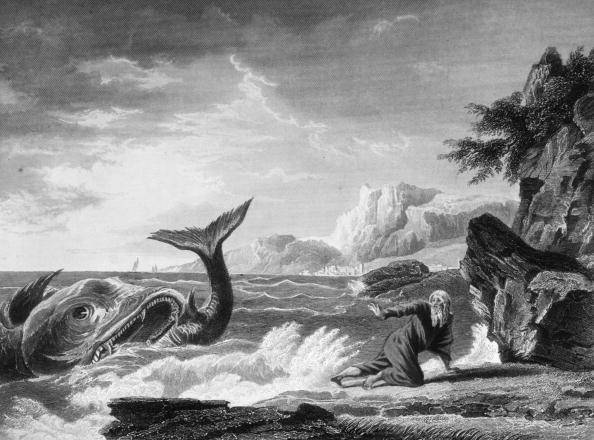
Chapter 2 demonstrates a dynamic character in Jonah. He cries out for salvation from the belly of the fish, saying in fact, that he will keep his vow to God (2:9). In other words he will be faithful to his role as a prophet of the Almighty. But as God spares him we find a prophet nearly unchanged by the dramatic events of his near-death experience. By chapter 3 he has obliged God with obedience, but not in heart. He has done the act of warning Nineveh as God commanded but his heart is bitter, angry, and resentful towards God.
By chapter 4 we have a full-blown brat. Jonah is moaping about on the side of the hill as he watches God extend grace to others. He is throwing himself an-all-out pity party. It’s as if he has completely forgotten the scenario with the fish. But the man probably still smelled like fish guts and had seaweed in his shirt collar. It wasn’t that long ago that God had rescued him, that Jonah had made this desperate cry and repented. But now, when he had survived and when things didn’t go his way he reverted to his rebellious ways. It’s such hypocrisy that strikes us as so audacious, and yet I am not sure it’s any worse than our own.
It’s easy to look at Jonah and think, how disgusting is this man. He calls himself a follower of God and does whatever he wants, even to the point of intentional disobedience. But how is this really any different from our daily trampling his commands? It’s easy to make strong commitments to God when were laying face down in the belly of a fish, but when life is back to some semblance of normalcy do we intend then to follow Him. When we get sick, when we get a brain tumor, when our house gets repossessed, when our kids run away from home, in such moments we can make faithfulness to God a priority. But when life is just “normal,” when it’s routine, when it’s not fish guts and seaweed, it’s just business meetings and grocery shopping, in those moments are we as concerned with obedience? If not then we find ourselves with the same level of hypocrisy as Jonah.
Maybe our hypocrisy isn’t as blatant as Jonah’s. Maybe we are more adept at hiding it, I know I am. But the truth is that levels of hypocrisy don’t really exist. All hypocrisy is wild rebellion, all of it is Jonah-esq, all of it is a spit in the face of Christ. We claim one minute to be a follower of his and in the next to do nothing more than what we really want. Hypocrisy, however, will confront us all eventually, as it does Jonah. And we must be forced to ask ourselves: do I really love Jesus more than myself? It’s the dreaded question of the hypocrite, because we often fear what our answer might be.
 Sparrow & Heart Soul Care
1 Comment