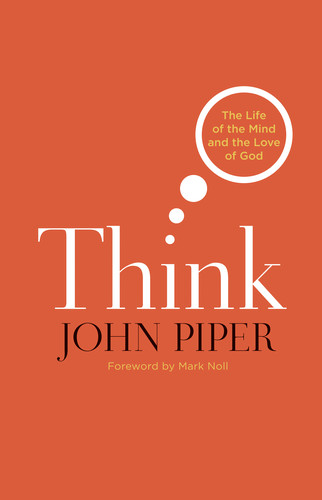
Part of getting older is experiencing the consistency of a routine, a bit of a repetitious life. When I was younger everyday had the potential of any number of wild experiences. I could find myself in Chicago one weekend randomly, and a Ramones cover band concert the next night. I could go to Denny’s at 3 a.m. or end up sleeping at a YMCA. But now that I am older I have real regular responsibilities. I have a job (make that jobs), kids, and a wife. I have bills to pay, places to go, people to meet with and all this takes a routine to get accomplished. Raising my children and loving my wife is, no doubt, its own adventure, but it requires consistency to be good. This kind of repetition is good in many things, but one area where it bothers me is in my reading. I don’t mind reading on the same theme (in fact I strategize to do this every year), but if I feel like I am reading the exact same perspective, emphasis, and expressions about that theme I get fairly disenchanted with a book. I have for a long time loved and been annoyed with John Piper’s writing. There are times where it feels as if once you’ve read one Piper book then you’ve read them all. He is repetitious, to put it mildly, and add to this that he is loquacious and you have a recipe for a frustrating book. So when I was given a copy of Think to read, I was certain I would get a chapter in and be annoyed. But Think is at one and the same time both typical Piper and not.
The book is all about balances. The balance between typical Piper and not is met in the book’s balance between a praise of thinking and a warning against the abuse of thinking. Anyone who has ever read or heard Piper knows that he is a fan of deep thinking, and he requires you to use your brains as you read this book. It’s not a book for those looking for a light read or some entertainment, and yet it is an invitation to all. The book is built around a key premise: serious thinking is a means to loving God and others (15). That should surprise no one familiar with the pastor/theologian. The idea is nascent in many of his other works, and yet its full formulation in this work is unique.
Chapter one begins by unfolding some of Piper’s own story and how he came to appreciate this premise. It is largely owing to two major influences, the first is Scripture and he quotes it extensively throughout the book. For Piper Scripture’s own discussion on the subject of thinking, the mind, understanding, etc. leads him to the conclusion that deep thinking is crucial to worship and service as a Christian. The second influence is Jonathan Edwards. It is Edward’s own writings on the subject which have brought more formal expression to Piper. It was Edwards who rooted the conclusions about deep thinking in the Trinitarian nature of God himself. “[Edwards] showed me that human thinking and feeling do not exist arbitrarily; they exist because we are in the image of God, and God’s ‘thinking’ and ‘feeling’ are more deeply part of his Trinitarian being than I had realized” (34). They way Edwards did this was by viewing and expressing the various persons of the trinity in unique relation to one another.
The Father is the deity subsisting in the prime, un-originated and most absolute manner, or the deity in its direct existence. The Son is the deity generated by God’s understand, or having an idea of Himself and subsisting in that idea. The Holy Ghost is the deity subsisting in act, or the divine essence flowing out and breathed forth in God’s infinite love to and delight in Himself. (34)
Now, Piper sees this expression of the trinity as an invaluable expression of the importance of deep thinking. But I confess I am more than just a little put off by this theology. It does not, in the least, sound Biblical! I have some complaint with Edwards’ theology of the Godhead. That Jesus is God’s idea of himself seems to diminish greatly is his personhood, as does the confession that the Holy Spirit is God’s emotional activity. This is neither the language of Scripture, nor is it, as Piper points out, the language of any other theologian (34). Beyond this Piper communicates great truths about how God describes the priority of thought in the spiritual life, but in this point he seems askew.
When he turns to Scripture, Piper is right on target. The book zeros in on a handful of verses. In 2 Timothy 2:7 Paul urges to think carefully “for the Lord will give you understanding in everything.” In Proverbs 2:3-5 says we are to seek insight and understanding like silver. There is another balance found in these verses too, for we find that we are to seek understanding and yet knowledge is, itself, ultimately a gift of God. “Our thinking does not replace God’s grace. It is the gift of grace and the pathway to more and more” (184). Now, of course, some will object that the Bible also uses negative language to speak about knowledge, knowing, thinking, the mind, reasoning, etc. and Piper is aware. So he turns nearly the entire middle portion of the book towards addressing this issue. It can feel almost bogged down as you read through chapters 9-11, but the end result is well worth the mental exertion.
Piper attacks head on the anti-intellectualism of much of modern Evangelicalism. Both 1 Corinthians 1:20 and Luke 10:21 give us a sense that God views wisdom negatively. After all He has made “foolish the wisdom of the world” and that He has “hidden these things from the wise and understanding and revealed them to little children.” Piper, however, proves these Scriptures have been widely misunderstood by those who pit them against deep thinking. In typical, brilliant, Piper-like exposition he unpacks these texts and deals with them in light of the larger New Testament picture of knowledge. The key, as Piper explains it, is the expression “wisdom of the world.” There are two types of wisdom: wisdom of this world and wisdom of God. The former build up the self-confidence and pride of man, the other exalts the grace of God. In relation to this Paul says that the “little children” are those who submit to God. So Piper explores in great detail how these verses do the exact opposite of what so many suggest they do. He writes:
Therefore, the warnings that Jesus and Paul have sounded in Luke 10:21 and 1 Corinthians 1:21 are not warnings against careful, faithful, rigorous, coherent thinking in the pursuit of God. In fact, the way Jesus and Paul spoke these very warnings compels us to engage in serious thinking even to understand them. And what we find is that pride is no respecter of persons – the serious thinkers may be humble. And the careless mystics may be arrogant. (154)
There is no ground, Biblically, then, he argues, for the anti-intellectual spirit of our modern church. Serious thinking is required to know and love God.
And it is that final point which ultimately drives all of Piper’s exegesis, analysis, and argumentation: true knowing loves God (160). “I conclude from all of this that it is just as dangerous to neglect knowledge as it is to make knowledge the ground of boasting” (161). It is not enough, then, to simply have “zeal” for God. We must have a zeal rooted in true knowledge about God. So he turns us to Romans 10:1-2. “Brothers, my heart’s desire and prayer to God for [his Jewish kinsman] is that they may be saved. For I bear them witness that they have a zeal for God, but not according to knowledge.” Piper then clarifies:
There is a zeal for God that accords with knowledge, and there is a zeal for God that is not in accord with knowledge. The one is essential; the other is suicidal. The reason Paul’s kinsman are not saved is that they have a zeal for god that is not in accord with knowledge. (162)
It is by means of serious knowledge that we come to salvation (as Piper argues in chapters 4 and 5) and that we grow in our zeal for God. “Knowledge is the fuel of the fire of love for God and man. If we turn away from serious thinking in our pursuit of God, that fire will eventually go out” (165).
This is a book that I greatly appreciated. It is at one both classic Piper and yet fresh in its presentation. The concepts here should not surprise anyone familiar with Piper, and yet they become so central in this book that we get a glimpse, as it were, behind Piper’s other books and how he came to formulate those concepts. But more than that this book is at once a balance of both devotional reading and treatise on the use of the mind. It is a book that calls us both to think and to feel. It is balanced in all the right ways…those of us who’ve read him, expect nothing less from Piper.
 Sparrow & Heart Soul Care
I think you will like Use it! Don’t abuse it! t-shirt.
Hello Pastor Dave, I read through all your published article 1 to 3 on this page. They are so helpful particularly the first one that talked about wisdom which is practically in line with an aspect of my ministry in : Counseling and Wisdom Sharing Prophetic Programme in Nigeria . I like to be my mentor and here is my mobile phone number: 08057930697