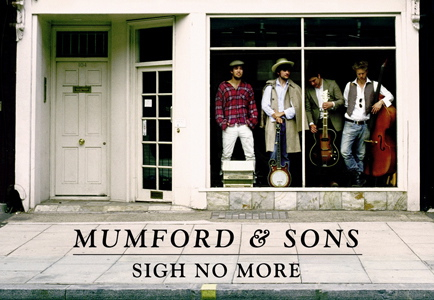
I don’t know if you know about Mumford & Sons, but you need to. They are musically and lyrically brilliant. I have always loved music, but I confess my tastes were often very shallow (I certainly would not have liked Mumford five years ago). It wasn’t until I met Kyle that I found quality music. You see I had rules about music: (1) I don’t like female singers; (2) I don’t like international music; and (3) I don’t like banjos. I had a narrow view, but Kyle’s perspective broadened my horizon and I am happy to say I no longer abide by any of those ridiculous rules. A fresh and different perspective is often all that we really need to better understand things. Kyle did that for me with music, and John Frame has done it for me with theology. Interestingly enough, Frame and his colleague Vern Poythress have done it for me through their use and application of what they term perspectival theology. From them I have learned that different perspectives in the doing of theology are crucial for deeper understanding.
Frame’s Doctrine of God was my first encounter with perspectival theology, but since then I have seen it utilized by him and Poythress across a number of subjects. The concept might concisely be explained as follows: the same knowledge or subject viewed from different angles or perspectives (see Frame The Doctrine of the Knowledge of God, 89-90). Most recently I stumbled upon an old article that Poythress wrote regarding the subject of Biblical Theology (see “Kinds of Biblical Theology”). Throughout the essay he utilizes this perspectivalist approach. Ultimately, what Poythress does is to provide us with a fresh reminder that theology is best understood through the use and application of the various perspectives.
What makes this discussion important is the fact that academia is continually becoming so specialized, such that few people see value in different perspectives. Poythress picks up on this error and seeks to tackle it in a couple of ways. First, he reiterates the methodological contributions of some of the great Biblical Theologians of the past generation: Richard Gaffin, Geerhardus Vos, and John Murray. Poythress is quick to point out how each theologian in their own right demonstrated, even if unintentionally, the perspectival approach to theology. Quoting Vos, he writes:
The difference [between Systematic Theology and Biblical Theology] arises from the fact that the principle by which the transformation [of Biblical material] is effected differs in each case. In Biblical Theology this principle is one of historical, in Systematic Theology it is one of logical construction. Biblical Theology draws a line of development. Systematic Theology draws a circle (131).
Murray and Gaffin too saw the interconnectedness between Biblical and Systematic Theology. What’s interesting, however, is that Poythress points out how much they focused on the benefit that Biblical Theology can bring to Systematic, but rarely the reverse. This is in part a problem of preferential treatment.
For many decades in theological study Systematics ruled the landscape. In fact Gaffin noted that some in the Reformed camp were very reluctant to even accept Biblical Theology as a credible Evangelical discipline. As time has gone on criticism of Systematic Theology has increased. A shift towards Biblical Theology as the preeminent discipline has taken place. I saw this even among my own classmates at seminary. The problem here is, however, that most of the time these folks with their methodological prejudices were simply settling for pop punk and missing out on Mumford & Sons. Don’t get me wrong, Biblical Theology and Systematic Theology (and historical theology, etc.) are each important in their own right. But alone they do not give us the full theological picture. This is why Poythress’s and Frame’s perspectival approach is so important.
Poythress turns this approach, however, more specifically to the discipline of Biblical Theology by considering the different “kinds” of Biblical Theology. Vos had defined this discipline very narrowly as the “process of self-revelation of God deposited in the Bible,” that is to say we don’t deal with a “finished product,” rather always as part of the unfolding plan (i.e. a process). But Poythress notes the varied approaches that even Vos himself took to Biblical Theology. He studied individual books, like Hebrews, or the theology of an individual author across a variety of books, like the theology of Paul (i.e. finished products). Or take Biblical Theologian George Ladd who studied the theme of inaugurated eschatology in the New Testament. The point which Poythress makes is that there are a variety of “foci” to be discovered in Biblical Theology, and that while we maintain the unity of Scripture we also recognize the diversity within that unity. A varied approach, then, serves best our theologizing of this diversity within unity. So he writes:
In these proposals I am tacitly using the idea of multiple perspectives: a particular theme can be illuminatingly used as a perspective on the whole. Any particular theme within the Bible is related, by means of the unity of the plan of God, to everything else in the Bible. By means of relations, one can start with one theme and use it as a perspective from which to view the whole of the Bible, or the whole of (say) Pauline theology (141).
There were, and perhaps are still, some who want to combine all formal theology into one single “structural model”. Poythress says this is not helpful, nor is it Biblical.
He points out that the apostle Paul did not utilize one model, one approach, one perspective. Rather, Paul, serving as a missionary, pastor, and church planter, and writing to a variety of contexts and situations, utilizes a variety of perspectives and approaches. Paul is varied in his methodology in order to be better at communicating real truth to real people in real life.
Friends, do not discount the benefits of a variety of methodologies, approaches, and disciplines for understanding God’s Word. We always want to get at the certain truth of Scripture, but the more angles we come at that certain truth the better we will understand it. Think about your theology like finding better music and you’ll be on the right track…oh, and be sure to listen to Mumford & Sons, you won’t regret it.
 Sparrow & Heart Soul Care