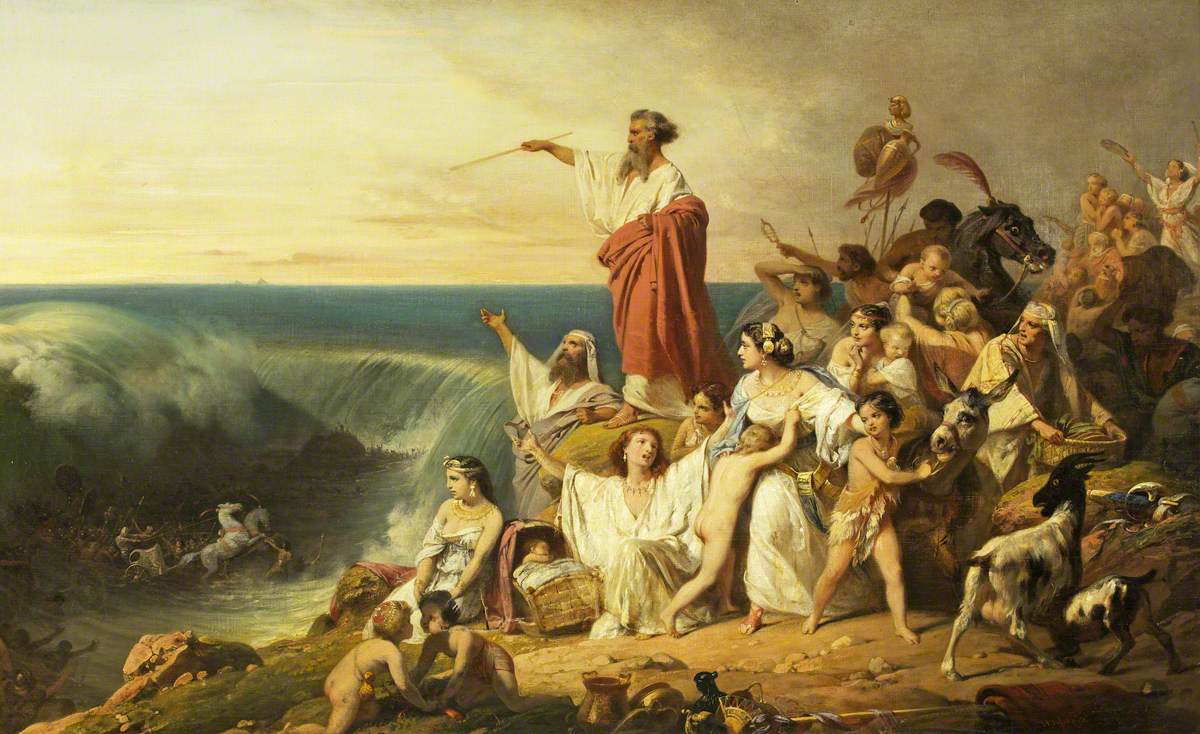
The God of Scripture is deeply compassionate and attentive to the weakness of His people. One particular way this compassion is displayed is in His willingness both to protect fragile faith and to strengthen it. In the book of Exodus, we see that God does not deal with His people in a single, uniform way. God often spares His people from what would overwhelm their faith, and at other times leads them into situations where that same faith must be strengthened.
Exodus 13 and 14 give us a clear example of each compassionate response. Within a span of just a few verses, God both protects and seeks to grow Israel’s faith. In 13:17 we find the first example:
“When Pharaoh let the people go, God did not lead them along the road to the land of the Philistines, even though it was nearby; for God said, ‘The people will change their minds and return to Egypt if they face war.’”
Rather than leading Israel along the shortest route, God deliberately directs them away from immediate conflict. The reason is explicit: their faith is not yet strong enough to endure the fear that war would bring. Left to themselves, they would turn back. In this moment, God does not expose their weakness—He accommodates it. He spares them from a trial that would overwhelm their trust in Him.
This is not an isolated pattern in Scripture. God cares deeply about the condition of our faith and deals with us accordingly. If the flame of our faith is a smoldering wick, He does not snuff it out (Isa. 42:3). When Peter is sifted by Satan, Jesus prays not for the removal of the trial, but for the preservation of his faith (Luke 22:31–32). The Lord knows how to sustain fragile faith without crushing it.
Yet, in His compassion, God does not merely protect weak faith—He also strengthens it. In Exodus 14:1–4, we see that God leads this same fragile people into a situation where His power will be displayed in such a way that their trust in Him can grow.
Then the Lord spoke to Moses: “Tell the Israelites to turn back and camp in front of Pi-hahiroth, between Migdol and the sea; you must camp in front of Baal-zephon, facing it by the sea. Pharaoh will say of the Israelites: They are wandering around the land in confusion; the wilderness has boxed them in. I will harden Pharaoh’s heart so that he will pursue them. Then I will receive glory by means of Pharaoh and all his army, and the Egyptians will know that I am the Lord.” So the Israelites did this.
Once again, God reroutes Israel. But this time, He leads them into apparent danger—hemmed in between the sea and Pharaoh’s army. The purpose is explicit: “the Egyptians will know that I am the Lord.” God is revealing His glory.
Yet this revelation is not only for Egypt. As the scene unfolds, Israel is called to respond in faith. Though they are afraid, Moses says:
But Moses said to the people, “Don’t be afraid. Stand firm and see the Lord’s salvation that he will accomplish for you today; for the Egyptians you see today, you will never see again. The Lord will fight for you, and you must be quiet.”
In this moment, God does not shield their weakness—He exposes it, so that His power might become the foundation of their trust. Israel will see His salvation, and through it, learn to rely on Him.
We see this same pattern elsewhere in Scripture. Paul speaks of his “thorn in the flesh” as a “messenger of Satan” given to humble him. Yet through that trial, he comes to understand that Christ’s power is made perfect in weakness (2 Cor. 12:1–10). God does not waste suffering; He uses it to display His sufficiency.
God both spares and uses trouble. His compassion is not expressed in a single way, but in diverse ways suited to His purposes. At times, He withholds what would overwhelm us. At other times, He leads us into circumstances where we must see and experience His sustaining grace.
Why does life unfold differently for different people? Scripture does not give us simple answers. But it does show us this: God is wise and purposeful in all His dealings. Sometimes our faith must be protected. Sometimes it must be deepened. In both cases, He is at work—revealing Himself as the One who is worthy of our trust.
 Sparrow & Heart Soul Care