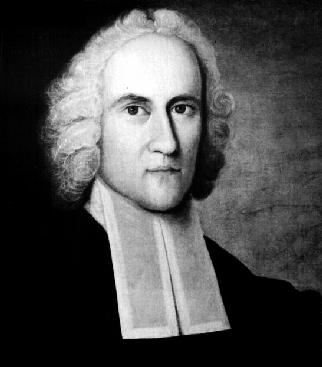
 I am certain Billy Joel had something different in mind. When he sang “Only the good die young,” he was probably not thinking of the legacy of numerous saints from the pages of church history. It’s what I think of. I think of Robert Murray M’Cheyne who died at 29 having accomplished more than most of us will in a lifetime. I think of David Brainerd whose biography inspired thousands upon thousands to go into foreign missions; he also died at 29. And of course, I think of Jonathan Edwards. Edwards untimely death reminds us all to think about how we manage the time we have left.
Though his transition to missionary work among the Natives seems to many of us like a step down the success ladder, Edwards used it to the glory of God and for the good of the church. He not only evangelized the lost and discipled young believers, but he also wrote some of the most important theological works in the history of the church. It is now wonder, then, that the College of New Jersey (Princeton) saw in him a potential institutional president. Edwards’s son-in-law Aaron Burr Sr. had been president at the college, but he passed away in 1757 and though it took some persuasion, Edwards was finally convinced to replace him at the beginning of 1758. The transition was sure to be hard on Edwards.
He was use to the quiet frontier life, with his books and his family close at hand he was able to do what he most loved. The college was to be a busy hub of students in need, administrative duties to be overseen, and people to interact with. He was also expected to spend time with his daughter and the Burr grandchildren who had just lost a husband and father. His comfort was much needed. Not to mention the fact that Edwards moved Princeton alone, leaving Sarah and the children back in Stockbridge. His main concern was their health. Small pox was rampant throughout the area and Edwards was naturally concerned for their health. “Always the scientist,” writes Marsden, “Edwards was a champion of inoculation, one of the few eighteenth-century medical practices proven beneficial” (493). He urged the Burr family to take precautions and incoluate themselves, and after Aaron’s death they obliged. They along with Jonathan, submitted themselves to the care of Dr. William Shippen in the winter of 1758. It would prove a fatal move for Jonathan.
Edwards, at first, was satisfied with the decision and sure of its usefulness. He wrote that he felt “quite easy and cheerful” several days afterwards. But, as the rest of his family recovered just fine, Edwards soon contracted small pox on the roof of his mouth and in his throat, making it impossible to swallow. For weeks he battled the illness: fever, starvation, and general weakness consumed him. On March 22nd, he died peacefully. Dr. Shippen wrote back to Sarah with the news, conveying:
Never did any mortal man more fully and clearly evidence the sincerity of all his professions, by one continued, universal, calm, cheerful resignation, and patient submission to the divine will, through every stage of his disease, than he; not so much as one discontented expression, nor the least appearance of murmuring through the whole. And never did any person expire with more perfect freedom from pain; – not so much as one distorted hair – but in the most proper sense of the words, he fell asleep. Death had certainly lost its sting, as to him. (Marsden, 494)
Edwards’s pursuits to know God and to keep his will were met that day, as he entered in the prefect restful presence of His Lord and Savior. His pursuit on earth, the discipline that he resolutely applied to it, and the shortcomings present throughout the process were all answered in that moment of death. Edwards died calmly not because of his discipline and pursuit, but because he knew the one who had pursued him. He died calmly because God’s grace was always greater than his pursuit, his discipline, and his shortcomings.
Edwards left an astounding legacy. From him came college presidents, Vice President Aaron Burr, preachers, missionaries, and faithful Christians. His legacy, however, carries more than that. From him have come countless theologians, missionaries, and pastors who, because of the works of Edwards, have pursued God with similar vigor and passion. And yet, I wonder: how much more could Edwards have accomplished had God seen fit to keep him alive? Could he have spared Princeton from the more liberal path it has gone today? Surely he would have written more significant and influential works to benefit the church. Surely he would have over seen the development and education of a host of young pastors who came out of Princeton under his presidency. Why did God see fit to take Edwards home when he did? He had so much more to accomplish. Why, we may wonder, does God see fit to take any home when their potential is so high?
I cannot answer such questions. God does not share such divine wisdom with us, nor need He. My wondering leads me to another place, though, a healthier one: what will I do with my life. I am 30 years old. M’Cheyne and Brainerd died at 29. Edwards was 54. The truth is that God has ordained the number of my days already (Psalm 139:16), I may die at 30, 31, 54, or 154. Who knows but God? The more pressing question to ask myself in light of Edwards unexpected passing is what will I do with the days I have left. What kind of legacy will I leave? Will I leave a legacy of faithfulness to God, pursuit of Him, a firm grasp on his grace? Writing of Jonathan’s legacy, historian George Marsden says:
Edwards, despite some evident shortcomings, was a saint according to the highest Reformed spiritual standards to which he aspired. Opponents, of course, viewed him as sanctimonious. Yet all would admit that few people have been so thoroughly disciplined. Far fewer have left so much written evidence that is so thoroughly consistent with a desire to know and to submit to the will of God. (494-495)
That is a legacy I want to leave, one that says I was devoted to knowing and submitting to the will of God.
Regardless of the number of days you have left, friends, what kind of legacy will you leave? Jonathan’s death compels us to think about such things. Ask yourself difficult questions, questions like: what is the center of my life? What do I most pursue? How do I spend my time? How would I describe my relationship with Jesus? What sin hampers my growth? What am I doing about it? How would I describe my knowledge and application of God’s Word? Am I excited for and anticipating Jesus’ return? What kind of legacy, friends, will you leave?
 Sparrow & Heart Soul Care
Denn auf unserem Geschenke und Geschenkideen Blog präsentieren unsereins schöne
Dinge und auch Wohnkamine. Wir ziehen umher und sehen dauernd mal was uns sehr gefällt und das
präsentieren wir hier. Freilich können Sie die meisten
Produkte auch sogleich kaufen, aber ausschließlich
per amazon, damit ihr Einkauf sicher ist natürlich!