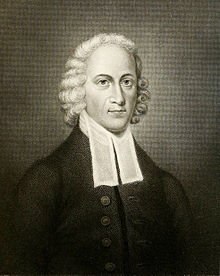
 Where do you go as a pastor when your own family terminates your employment? That’s precisely what happened to Jonathan Edwards. The church he pastored in Northampton was full up of a great majority of his own kin, and yet they so hated him that by the end of his time there they said they would rather go without preaching on a Sunday than invite him to speak. So what next step does the pastor take? For Jonathan it led to a wilderness, but one that proved both fruitful for him and great for the church.
The Massachusetts frontier in 1751 was a unique place. Stockbridge, where Edwards went to pastor, was distinct particularly for being a community of both English and Natives, dwelling side by side. Two tribes on the fringe of extinction had been willing to step under English protection in order to survive, and so a small mission was set up for them. Here Jonathan preached and pastored every Sunday to promote the gospel among them.
It must have struck many as a step backwards for the great theologian. It was not the esteemed position of the heir of the pulpit of Solomon Stoddard. And it was a place far removed from the powerful and influential. Yet here Jonathan did most of his greatest work.
As a pastor he was particularly thrilled to see the Spirit of God moving among the hearts of the Indians. He wrote to his friend John Erskine saying, “Some of the Stockbridge Indians have of late been under considerable awakenings – two or three elderly men that used to be vicious persons” (Iain Murray, Jonathan Edwards: A New Biography, 392). At one point he was preaching at four services every Sunday. One for the Mohawks, one for the Housatonics, and two for the English congregation. He loved the Indians. He is known to have met with the leader of one tribe only three weeks after having been installed and stressing to them his commitment to them, and his concern that they know the one true God. Historian Iain Murray quotes Edwards’s words to the tribe leaders, saying:
Your coming here will rejoice the hearts of all good men as they will hope it will be a means of your coming into greater light and knowledge in the Christian religion and so be a means of your eternal salvation and happiness…We don’t desire to keep you from the knowledge of the Bible the Word of God as the French priests do their Indians. We are willing that you could read the Word of God as well as we and know as much as we…While I continue here I shall be willing to come from time to time and to do my utmost to instruct you in the true Christian religion. (369)
He was a committed pastor and faithful teacher. Even if it may have seemed a far cry from his plans, he was faithful to what God gave him.
But beyond his role as a pastor and evangelist, Edwards also took time to do some of his most important writing while here in Stockbridge. Here in the frontier, away from the stress and strain of the Northampton affairs, Edwards was able to produce four of the most significant theological works ever written by an American philosopher/theologian.
In many regards Edwards was not the prime candidate for a missionary outpost. He was awkward and often anti-social. Many saw him as too heady and academic to be useful in teaching the natives, and particularly useless in gaining their allegiance to King George. the manager of the mission said of Edwards, “I am sorry that a head so full of divinity should be so empty of politics.” Jonathan Gibson reminds us that Edwards said of himself, “I am fitted for no other business but study” (“Jonathan Edwards: A Missionary,” Themelios 36.3). Edwards took full advantage of this season of his life to write. In fact when offered the job at the then College of New Jersey, he stressed that to take the position of President would harm his writing projects. He wrote back:
My heart is so much in these studies, that I cannot find it in my heart to be willing to put myself into an incapacity to pursue them any more, in the future part of my life, to such a degree as I must, if I undertake to go through the same course of employ, in the office of a president.
His heart was in his studies, and it is evident in their staying power and their influence in the church today.
Four of his greatest works with the product of this season of his life. While at Stockbridge Edwards wrote The Freedom of the Will (1754), Great Christian Doctrine of Original Sin Defended (1758), my favorite work of his Concerning the End for Which God Created the World, along with The Nature of True Virtue (both in 1765).
However we understand the reasoning behind Edwards arrival at Stockbridge, he did not waste those seven years. It is a useful reminder to us all that God is sovereignly orchestrating our days. Regardless of our plans and our dreams, no matter how much things feel like a setback or disappointment, we must make full use of our days and situations to honor him. Jonathan Edwards did not waste his years in Stockbridge. He served the people well and he wrote amazing theological works that the church still treasures today. What will you do with the time and the situation God has placed you in?
 Sparrow & Heart Soul Care
2 Comments