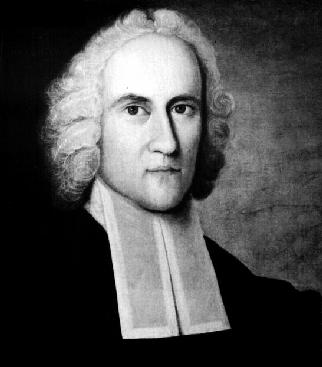
 It has been called many names: The Lord’s Supper, Communion, the Eucharist, the Table of the Lord. However you speak of it, the Bible makes clear that it is to be a part of our corporate life together as the church. Not everyone agrees on its meaning, its significance, its placement in the service, nor even its frequency. But for Jonathan Edwards the most pressing issue was that of participants. Jonathan’s disagreement with his grandfather over who was eligible to partake in communion was a costly disagreement. His commitment to Scripture in developing the practices of the church, however, is a refreshing reminder of the normative role of God’s Word for the church.
The subject of how was eligible to partake of communion was not isolated to Jonathan and his grandfather. It had predated both of them by many centuries and had been a main feature of discussion in New England for some time. But Stoddard’s position was well established and often debated in his own day.
The disagreement between the two pastors really lies in their divergent understandings of the nature of communion. The esteemed Solomon Stoddard saw the Lord’s Supper as a “converting ordinance.” In his own words:
Here it may be inquired whether such persons as have good conversation and a competent knowledge, may come to the Lord’s Supper, with a good conscience, even in the case where they know themselves to be in a natural condition. They may and ought to come, though they know themselves to be in a natural condition; this ordinance is instituted for all the adult members of the church who are not scandalous, and therefore must be attended by them; as no man may neglect prayer, or hearing the Word, because he cannot do it in faith, so he may not neglect the Lord’s Supper. The Lord’s Supper is instituted to be a means of regeneration…it is not only for the strengthening of the saints, but a means also to work saving regeneration. (The Doctrine of Instituted Churches Explained and Defended from the Word of God, 21-22)
It should be noted here that the “half-way covenant,” as it was called, had created a dynamic for congregational churches where non-believers were admitted to the membership of the church. This raised a host of questions about how one connected the life of the church to those not yet possessing saving faith. Stoddard’s views on communion included those non-professing members in partaking Communion with the rest of the church. As he saw it, if you were a member of the church you were responsible to participate in all the activities of the church. But this view did not go uncontested.
Many in New England, though they revered Stoddard, wrote rather pointedly against his position. Edward Taylor, well-known for his poetry, wrote from Westfield publically decrying that Stoddard was demeaning the sacraments by his open communion practices. Others, particularly the Mathers, were even more vociferous. Increase Mather, who thought of Stoddard as a sort of brother, wrote dozens of tracks against Stoddard’s view. Even his own son-in-law, Jonathan’s father, disagreed with the venerable “Pope.” Having been highly influenced by the Mathers himself, Timothy Edwards could not be convinced of supporting Stoddard’s position. But for Jonathan the debate had a far more personal nature to it.
Jonathan came to assist his aging grandfather in the pastorate at Northampton in 1727. The two men agreed on many things, as has been noted. And there is no doubt but that Solomon Stoddard had a great influence on his grandson. Yet, on a number of matters the men were in disagreement. Jonathan wrestled with many of these matters, often bidding his time to make changes to the church. But his convictions on the Lord’s Supper seem to be hinted at in many of his early writings, even before the formal defense on the qualifications for communion, published in 1749. By the time he succeeded his grandfather in 1729 he was surely already thinking about such changes.
Those changes came with no small amount of controversy. This was not just a matter of right doctrine in the church of Northampton, it was a matter of an esteemed legacy. Jonathan, as we have noted, was not often particularly sensitive to others. George Marsden notes that he “could hardly have picked a worse time to launch his conservative revolution” (345). The final Stoddard to pass was the beloved Colonel John Stoddard, who was not only respected in the community, but was Jonathan’s great ally. Almost immediately after his death Jonathan began to make plans for and announce changes to established policy on communion. To many, it seemed disrespectful, the betrayal of the Stoddard legacy. Due to such animosity Jonathan requested permission to preach on the matter, but was denied. Instead, the congregation agreed to allow him to publish his views. Thus was born his treatise.
But still the controversy drug on for another year. The people thought Edwards’ tactics questionable at best, many were more frank. They wondered why he had waited so long to share these views. They questioned why he waited until he had attained a fixed salary before he announced, why he waited until after John Stoddard’s death to announce them. Quite honestly, many thought Edwards deceitful in his approach. It seems many of these concerns were not founded, but the matter would come to an end only with heartbreak.
When the council met to discuss the removal of Jonathan Edwards from the pastorate in Northampton those favoring the minister were in the minority. From June 19-22 a small group of advocates argued for “slowing down the process so as to be able to seek reconciliation. The vocal townspeople would hear nothing of delay. Only immediate separation would do” (Marsden, 360). And so it was that Jonathan Edwards, the greatest theologian America has ever produced, was voted out of his congregation.
There is no question, in my opinion, but that much fault lies with Edwards. His demeanor and personality were such that he often offended others. He was insensitive and impatient with his congregation, and seemingly did not lead them well in this event. And yet, he was committed to Scripture. He had, no doubt, inherited a mess. It was his conviction, however, that Scripture ought to inform the practices of the church, and as he studied Scripture he found no support for the open communion his grandfather had established. Change was necessary for them to conform to Scripture.
Modern Evangelicalism can learn much from this debacle. Pastors should note Edwards behavior and be conscious that their own leadership is more sensitive and tender. And yet many pastors would do well do refresh themselves on the normative role of the Scriptures. God’s Word establishes the practices of the church. As Edwards read 1 Cor. 11:26-29 he saw conversion as a necessary prerequisite to Communion. Those professing genuine faith can and should partake, those who “know themselves to be a natural condition” should most assuredly not. As we think about our context, and as we wrestle with the various ministries and practices of our church we need to ask ourselves if the Bible speaks to these issues. Does what we do as a church, together and in our corporate life, reflect a dependency on God’s Word. If it doesn’t, maybe we need to think more carefully about what we do. God’s Word establishes the foundation upon which our churches stand. The question that this history lessons presents us is as follows: will your church stand on the Word of God too?
 Sparrow & Heart Soul Care
1 Comment