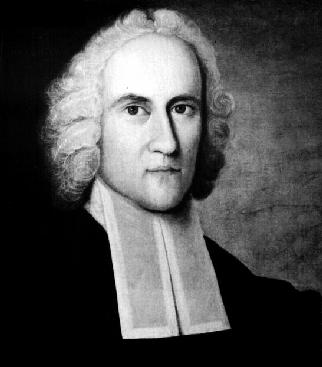
 To speak of Jonathan Edwards with any sort of historical context one must speak of his grandfather, Solomon Stoddard. As assistant to his most revered grandfather, Edwards had received a coveted position. With the position, however, came some anxieties. The two men agreed on many things, and yet not all things. Though he respected his grandfather, the disagreements between the two men would become a serious issue for Edwards in later years. Edwards’s willingness to disagree with his famed grandfather can be a real example to the blind celebrity worship in much of modern Evangelicalism.
“Pope of the Connecticut Valley,” was the label bestowed on the great patriarch. George Marsden writes of the veneration of Stoddard when he says: The people of Northampton, Edwards later recalled, regarded Stoddard “almost as a sort of deity.” Not online Northampton but throughout the region, Stoddard was a force (114). Jonathan too had great respect for his mother’s father. He spoke of “Mr. Stoddard” as wise, a great preacher, and as one much-used by God. In this mentor the young pastor found much kinship beyond blood.
For example, Stoddard was known to stress the importance of evangelizing the natives. This would become a great burden for Edwards not only as he would later move to the frontier, but even upon his initial arrival to Northampton. The general urgency of evangelism was something that connected both men. Marsden points to similarities in the themes of the two men’s writings. Stoddard wrote about “spiritual light” in his 1719 Treatise on Conversion, and said:
When men know the excellency of God, they must choose him. The glory of God is such, that it captivates the heart; where it is seen, it has magnetic power; it irresistibly conquers the will; there is a necessity of loving God, when he is seen.”
The two agreed on other themes as well. Jonathan wrote that the “best philosophy that I have met with of original sin and all sinful inclinations, habits and principles, is undoubtedly that of Mr. Stoddard’s, of this town of Northampton” (Marsden, 119). And on the importance of preaching hell both men were connected. But they were not to be perfectly united.
The men were of very different personalities. Stoddard was especially noted as a people-person, a great conversationalist and naturally comfortable with others. Edwards was bookish, awkward, and struggled to be relational. His grandfather too preached without notes and often urged others to do so. Edwards, though he memorized his sermons, continued to write out full manuscripts for many early years, and he found this advice from Stoddard troubling.
The two disagreed as well on the assurance of salvation. As a young man Edwards had often struggled with the assurance of his salvation. He was very aware of his own heart and its ability to deceive him. He searched for a long time to find evidence of his conversion, fruit of God’s work in his heart, and he was often unsettled and disturbed by a lack of surety. Stoddard, on the other hand, had believed that a true convert “will know it.” “It is not good preaching,” he would say, “to teach that frequently men are ignorant of the time of their conversion” (Marsden, 119). On this subject Edwards own experienced mandated he disagree. The most troubling subject, however, of contention would be that of the Lord’s Supper.
Solomon Stoddard’s views on the Eucharist had long been under scrutiny in New England. Marsden writes that “New England was almost divided over Stoddard’s opening up of communicant membership as it had been over the half-way covenant” (31). The change to allow non-believers to partake of the elements of communion was so drastically divergent from the practice of the churches in New England (and I might add the Scriptures) that it drew out theological responses. Most notably the redoubtable Cotton Mather. Jonathan’s own father, Timothy, was in disagreement with his father-in-law. It was on this subject that eventually Edwards’s own disagreements would create a division between he and his family.
We will discuss in a future post the disagreement and the ways in which it led to a major fall-out between Jonathan and his congregation, but it is important here to simply note the disagreement. The influence of his grandfather was certainly a reality for the young theologian. How could it not have been? Much like the influence of his father, only perhaps in a more positive light, Solomon Stoddard helped to shape Jonathan Edwards into the preacher and theologian that he became. But Jonathan models for us well the need to test for ourselves the theological accuracy of those we love and respect. A good theologian does not blindly follow another, he is always carefully thinking and articulating for himself, checking according to the infallible Scriptures the accuracy of the doctrines he holds to.
Celebrity Christianity has created, in many respects, a dysfunctional Evangelicalism. We look to key pastors and thinkers as the stars of our little world and we accept, without consideration, all that they say. We see it with everyone from Rob Bell and Mark Driscoll, to John MacArthur and Andy Stanley. We must be willing, like Edwards, to think critically about all the theological points we affirm. Just because John Piper said it does not make it gospel truth. Just because Mark Driscoll tweeted it does not mean it’s right, and just because Solomon Stoddard wrote about it does not mean it squares with Scripture.
We will see how this principle applies specifically to Edwards in the coming weeks. I believe Edwards articulation of the Trinity is unhelpful, and certainly his practice of holding slaves was. But his model here is of value. Though his grandfather was the most respected man in the whole region, beloved, and deserving of much appreciation, Jonathan was not willing to surrender commitment to the truth of Scripture for the sake of acceptance in his family. If more pastors and more Christians would model such devotion to the Word of God today the church would be a healthier place.
 Sparrow & Heart Soul Care
1 Comment