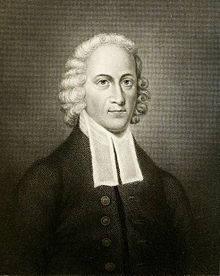
 Dads matter! It would be no small understatement to suggest that father’s have significant influence on their children. That influence, of course, can be either positive or negative. Many have turned to consider the dynamics of Jonathan Edwards’s relationship with his father to explain the man’s own personality and behavior. It is important to consider that relationship. We must be careful, however, not to overestimate that influence.
Timothy Edwards was nothing if not a disciplined man. Some historians have described him as a “perfectionist.” This perfectionism was true first and foremost of his own character. He had surely learned such behavior from his own father. His father had brought the young family from poverty to moderate success. As a successful merchant he had single-handedly boosted the families station in the Hartford. Discipline and hard work were the dominate characteristics of Richard Edwards. But Timothy’s mother was not so well-respected in the community.
Elizabeth Tuttle was known for repeated fornication, affairs, and eventually revealed a serious affliction of psychosis. In an age where such illnesses were not understood or properly treated meant that she was as despised as she was feared in her community, indeed in her own home. It ran in her family too. Elizabeth’s sister murdered her children, while her brother killed another his sisters. She eventually abandoned Richard and all six of her children, of which Timothy was eldest. There is no doubt that Timothy had to overcome much by way of a social stigma, and he worked hard to gain the respect of his community. Eventually gaining the admiration of the so-called “Pope of New England,” Solomon Stoddard. Discipline paid off for the young man. But it didn’t impact just his own character, it translated into his parenting and impacted his children too. Particularly the discipline of Timothy was felt by the young Jonathan.
Timothy learned his strictness from his father. Writing after his death and speaking of his father’s relation to the children Timothy said, “Yea his spirit (though he loved them dearly) was more stirred against that which is evil in them than in such as were but neighbors” (Marsden, 22). George Marsden writes about the impact this made on Jonathan, saying:
Everything we know about Timothy Edwards suggests an intensely disciplined perfectionist, a worrier about details, a firm authoritarian who was nonetheless capable of good humor and warm affections toward his family. Jonathan Edwards never entirely escaped the hold this demanding yet affectionate father had over him. He followed closely in his father’s footsteps and, except for greater reserve, closely resembled his father in standards and attitudes. (21-22)
Marsden notes that Timothy was known as a “disciplinarian who set high standards for everyone” (34). He held his only son to quite a high standard, both academically and even more so spiritually. While Edwards was easily fit to reach the heights of the one, he could not, of his own striving, attain the high levels of spiritual maturity that his father held out to him. This was frustrating to both men.
Meeting the demands of an exacting and strictly religious father was surely taxing on a young Jonathan. Some scholars have interpreted his own views of God as reflections of his relationship with his father. Some have interpreted Edwards more through the lens of Freudian psychology than in terms of the Christian faith itself. But it would be false to view Edwards’ faith solely in these terms. His later writings reveal genuine belief and love, and rather standard, orthodox theology. In fact his earlier rebellions against his father, and his father’s religion, reveals that his conversion could not be rooted merely in a fatherly projection. There was something more to God than that association. Marsden writes:
A crude interpretation of Jonathan’s experience might suggest that his vision of God was a cosmic projection of his father. While there is always a grain of truth in such reductionist observations, the essence of the matter is nearly the opposite. So long as Jonathan’s God was substantially a projection of his father or of other human analogies, he could not believe. If God were simply a cosmic version of the greatest imaginable human, God would still be by human standards a capricious and unreasonable tyrant, the father whose love turned out to be petty control, harsh judgments, tenderness mixed with fits of anger, unyielding disciplines, and punishments. In fact, it was only when Jonathan’s vision expanded to appreciate that the triune God who controlled this vast universe must be ineffably good, beautiful, and loving beyond human comprehension that he could lose himself in God. (42-43)
Jonathan’s character, no doubt, is rooted in the example and instruction of his father. But his conversion is rooted in something more.
It is important that as we evaluate Edwards and study him this year we do so in a way that is honest about the man and takes him at his word. We can be critical, and indeed should be at times. But we have no reason to doubt that his conversion and his love for God are genuine and true to orthodox faith. Though his relationship with his father was crucial and formative for the young man, it was God breaking through in all his glory and mercy that truly saved the man.
 Sparrow & Heart Soul Care
When we are young our parent’s faith is our faith, but we as individuals have to move into our our personal relationship with Jesus. Interesting article. Thanks.
So true, Mark.