 I once heard church historian Timothy George describe the setting of the Reformation with the immortal words of Charles Dickens:
It was the best of times, it was the worst of times, it was the age of wisdom, it was the age of foolishness, it was the epoch of belief, it was the epoch of incredulity, it was the season of Light, it was the season of Darkness, it was the spring of hope, it was the winter of despair, we had everything before us, we had nothing before us, we were all going direct to heaven, we were all going direct the other way…
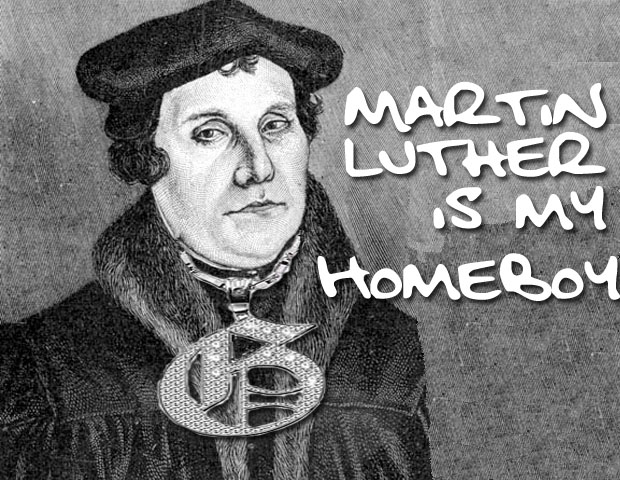
The context in which Luther finds himself as a young monk is one of great complexity and diversity. There were major social, political, and religious factors that all played out together to create perfect soil in which the impending Reformation could blossom.
Socially, increasing divisions between the rich and poor were creating serious tensions. The rise of money economies created new wealth and new poverty; it came quickly into contact with old school feudal mentalities. Peasants were in revolution all over Europe. Inflation, taxation, and plague bombarded the people and social unrest continued to rise. The peasants dissatisfaction would allow them to quickly grab hold of the Protestant rebellion when it came into the picture.
Politically, Reformation Europe saw the rise of the modern nation-state. Factions and hostility brewed hot everywhere in Europe. The authority of Emperor and Pope were constantly challenged by those within the Holy Roman Empire. Religious wars found good use for advances in metallurgy with the canon. It was first used in The Hundred Years War, a conflict that would have still been fresh in the minds of people when Luther was born in 1483. Timothy George has noted, “Why the Reformation succeeded in Germany, failed in France, and never took root in Spain can only be understood in light of the distinct political histories of these states” (Theology of the Reformers, 17).
The religious turmoil of the age was by far the most significant. Carter Lindberg has stated that “The major crisis of the late medieval era was a crisis of values” (The European Reformations, 41). By the 1500s the papacy of the Roman Catholic Church had reached the height of its corruption. Pope Julius II (1503-1513) had been known as the “Great Warrior Pope” and those who preceded and followed him were as equally poor representations of Christ and the apostle Peter, the supposed first pope. Critics of the church were pointing to the abuses of patronage (appointing people to religious office for financial gain), and the promiscuity of some of the clergy. Protestants would not be the only one calling for reforms. There was a general sense of distrust among the clergy of the late Medieval era.
Into this climate Luther was born, and in this context he would grow up. It’s important to remember that the Reformation did not happen within a cultural vacuum. Luther was not simply some disgruntled monk. He was a character in this world. It’s important to note that like Luther we all find ourselves in various contexts, good and bad. But no matter what is going on social, political, or religious around us we have the call to be faithful to God, faithful to His Word, and to care for the spiritual growth of those around us. That is part of the legacy that Luther leaves us. His context reminds us that we all can and must do the same. Our age is not so different from His, and we all have the responsibility to reform and be reformed according to the Word of God.
Update: Justin Taylor posted a video of Timothy George teaching on the role of Scripture in the Protestant Reformation and the life of Luther. It’s worth checking out.
 Sparrow & Heart Soul Care
Enjoying your posts on Luther, bro. Very informative.
Thanks, Josh
Nice summary Dave. Can you recommend any good books on Luther?
Rob, I intend at the end of this series to give a bit of an annotated bibliography. In the meantime I would recommend Roland H. Bainton’s classic “Here I Stand: A Life of Martin Luther.” It’s a classic work, one of the most respected, and written by one of the most respected Luther scholars. In many ways it reads more like a novel than a history.